
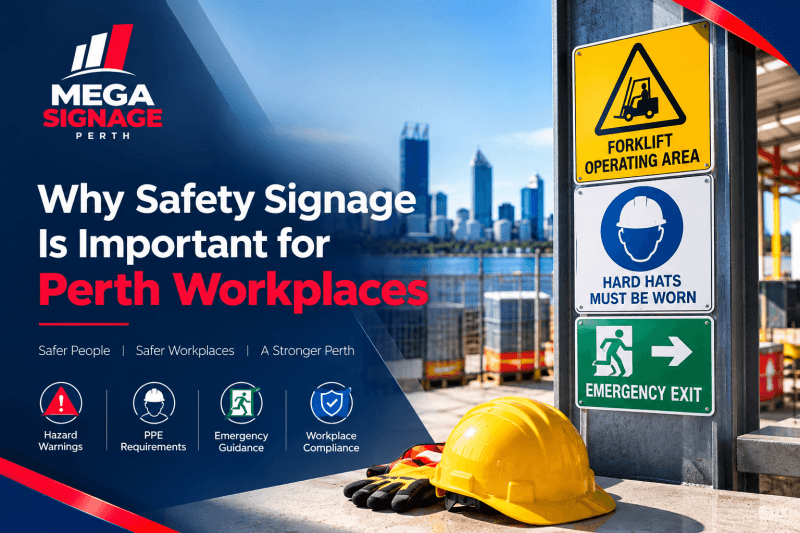
Walk into a busy warehouse, construction site or workshop in Perth, and you will probably notice signs around entrances, machinery and work areas. Some warn people about danger, while others explain which protective equipment must be worn or where to find an emergency exit.
These signs might seem like a small part of the workplace, but they can make a real difference to how people understand their surroundings.
Imagine a delivery driver entering a warehouse in Welshpool for the first time. The driver may not know where forklifts move, which doors are restricted or where pedestrians should walk. Without clear instructions, it is easy to enter an unsafe area by mistake. A well-placed sign can help the driver recognise the risk before moving any further.
This is one of the main reasons safety signage is important for Perth workplaces. It helps businesses communicate essential information to employees, contractors, customers and visitors. For Mega Signage Perth, the goal is to help local businesses understand the value of clear, practical signage that suits their working environment.
How Safety Signs Make Everyday Work Safer
Workplace hazards are not always obvious. A wet floor might be difficult to see, electrical equipment may present a risk during maintenance, and a forklift can approach from a direction that a pedestrian does not expect.
Safety signs give people an opportunity to recognise these dangers and take appropriate precautions.
For example, a warning near a loading dock can alert workers to moving vehicles. A sign outside a maintenance room can identify an electrical hazard, while a notice near machinery can remind operators to follow the required safety procedures.
These small reminders are especially useful in busy workplaces where people are concentrating on several tasks at once.
Of course, a sign cannot prevent every accident. Businesses still need to manage hazards properly, provide training and maintain safe equipment. Signage works best when it supports these wider safety measures.
Different Perth Businesses Need Different Safety Signs
There is no single collection of signs that suits every workplace. The right choice depends on the work being performed, the people using the premises and the risks present.
Construction sites
Construction sites can change from one day to the next. Workers may be dealing with excavations, heavy equipment, overhead work and temporary access routes.
Signs can communicate site entry rules, restricted areas, personal protective equipment requirements and vehicle movement warnings. A construction project in Joondalup, for example, may need different signs as the work area changes throughout the project.
Site managers should regularly check that signs reflect current conditions rather than leaving outdated warnings in place.
Warehouses and factories
Warehouses often have forklifts, loading equipment, storage racks and pedestrian walkways operating in the same environment.
Clear signs can help drivers and pedestrians recognise designated routes and restricted areas. Factories may also need warnings around machinery, electrical installations or locations where hearing and eye protection are required.
Businesses in Malaga, Welshpool and Canning Vale should consider how workers move around their facilities when deciding where signs are most useful.
Offices and retail stores
Safety signage matters in offices and shops as well. A wet floor near a store entrance, an obstructed emergency exit or an unfamiliar evacuation route can create problems for staff and visitors.
Depending on the building and its risks, businesses may need signs identifying first aid facilities, emergency exits, fire equipment or restricted areas.
The important thing is to choose signs that address actual workplace needs instead of installing them simply for appearance.
Helping Employees Understand Workplace Safety Rules
Even experienced workers can forget an instruction or overlook a hazard when they are busy. New employees may also be unfamiliar with the procedures used at a particular site.
Signs provide a visible reminder of important rules throughout the working day.
A sign at the entrance to a workshop might explain that safety footwear is required. Another near a noisy work area could identify the need for hearing protection. In a storage facility, signs may remind employees to keep emergency routes clear.
Clear wording makes these instructions easier to understand. Where appropriate, familiar safety symbols can help people recognise a message quickly, including visitors who are unfamiliar with the workplace.
However, businesses should not rely on signs as a replacement for induction sessions or staff training. Employees need to understand not only what a sign says, but also what action they are expected to take.
Safety Signage and WHS Requirements in Western Australia
Workplace health and safety is also a legal responsibility. Businesses operating in Perth need to understand their obligations under Western Australia’s workplace safety laws.
The Work Health and Safety Act 2020 (WA) and the Work Health and Safety (General) Regulations 2022 establish duties and requirements for managing workplace risks. Specific circumstances may require warning signs, instructions or other forms of safety information.
For example, certain hazardous chemical storage arrangements and confined-space activities have particular safety requirements. The signs needed will depend on the circumstances and the regulations that apply.
This means businesses should not assume that displaying a few general warning signs automatically makes their premises compliant.
A useful starting point is to review the workplace’s hazards, identify any signage requirements and consult the relevant official guidance. WorkSafe Western Australia provides information.
Where a sign must meet a specific standard, businesses should verify the required wording, symbols, colours, dimensions and placement before ordering it.
Why Sign Placement Matters as Much as the Sign Itself
A safety sign only helps when people can see it and understand its message in time.
Consider a forklift warning placed behind stacked boxes. Although the sign is present, a worker approaching the vehicle route may not notice it until they have already entered the area.
The location should therefore be considered before the sign is installed.
Businesses should place warnings where people can recognise a hazard before reaching it. Signs should also remain visible when doors open, equipment moves or stock is stored nearby.
The size matters too. A small sign might be sufficient for a close-up instruction on a piece of equipment, but a warning intended to be read from across a large warehouse may need a different format.
Lighting, viewing distance, background colours and the direction people approach from can all affect readability.
For emergency information, businesses should also make sure signs remain visible and consistent with the building’s current evacuation arrangements.
Choosing Materials That Suit Perth Conditions
Outdoor signs in Perth can be exposed to strong sunlight, hot weather, dust, wind and rain. A material that works well indoors may not be the best option for an exposed construction site or loading area.
Aluminium may be suitable for many durable outdoor applications, while rigid plastic can be appropriate for a range of indoor signs. Reflective materials may be useful where visibility in low-light conditions is important.
The right choice depends on where the sign will be installed, how often the area is cleaned, the possibility of physical damage and how long the sign is expected to remain in use.
Businesses should also consider the mounting method. A sign that becomes loose or turns away from the intended viewing direction may no longer communicate its message effectively.
Mega Signage Perth can help businesses consider suitable signage options for different locations and applications. For safety-critical signs, the final selection should also be checked against the relevant workplace requirements.
Keeping Safety Signs in Good Condition
Installing the correct signs is only part of the job. They need to remain readable and accurate as the workplace changes.
A faded warning outside a building may be difficult to recognise. A damaged sign inside a warehouse might have wording that can no longer be understood. During renovations, an emergency direction may become misleading if the building layout changes.
Regular inspections help identify these problems before they cause confusion.
During a workplace inspection, check whether signs are clean, securely mounted, easy to read and positioned correctly. Look for obstructions and make sure the information still matches the hazards present.
Businesses should also review signage after introducing new machinery, changing pedestrian routes or reorganising storage areas.
If a temporary hazard has been removed, temporary warnings should be taken away when appropriate. Permanent signs should remain accurate and relevant to the work being performed.
How Safety Signage Can Support a Better-Organised Workplace
Clear signage can make everyday work easier by helping people understand where they need to go and what precautions they should follow.
A delivery driver can identify the correct entrance. A contractor can recognise a restricted area. An employee can locate first aid equipment without searching through several rooms.
These benefits are particularly useful in larger facilities and workplaces that receive regular visitors.
For businesses operating across Perth, consistent signs can also make different locations easier to navigate. However, each site still needs signage that reflects its own layout and risks.
The best results come from combining clear signs with practical workplace procedures. If a pedestrian route is unsafe, simply placing a warning nearby may not be enough. The business should also consider whether the route needs physical separation or another control measure.
Safety signs are most useful when they form part of a thoughtful approach to managing risks.
Choosing Safety Signage for Your Business
If you are planning safety signage for your workplace, start by walking through the premises and considering what an unfamiliar visitor might need to know.
Look at entrances, vehicle routes, machinery, storage areas, emergency exits and locations where protective equipment is required. Identify any places where a person could encounter a hazard without receiving a clear warning.
Next, check which signs are required and choose designs that suit their purpose. Consider the material, size, wording, viewing distance and installation location.
It is also worth reviewing the signs already in place. Some may be damaged, difficult to read or no longer relevant after changes to the business.
Mega Signage Perth can help local businesses explore signage options for their premises, whether they operate a retail store, warehouse, office, workshop or construction site.
For regulated applications, confirm the final specifications with a qualified workplace safety professional or the relevant authority.
Conclusion
Safety signage perth is an important part of how Perth workplaces communicate hazards and everyday safety instructions. It helps employees recognise risks, guides visitors around unfamiliar areas and makes essential information easier to find.
But effective signage is not just about putting signs on walls. Each sign needs a clear purpose, a suitable location and a design that people can understand. It should also remain accurate as the workplace changes.
When combined with staff training, sensible risk controls and regular inspections, well-planned signage can support a safer and better-organised working environment.
For businesses across Perth and surrounding suburbs, Mega Signage Perth can help explore practical signage options suited to different workplace needs.
Frequently Asked Questions
1. Why do Perth workplaces need safety signage?
Safety signs help employees, contractors and visitors recognise hazards, follow workplace instructions and locate emergency facilities. The signs needed depend on the activities and risks at each site.
2. Which safety signs are commonly used in workplaces?
Common examples include forklift warnings, electrical hazard signs, PPE instructions, restricted-access signs, emergency exit signs and first aid signs. The correct selection depends on the workplace and its specific requirements.
3. Is safety signage compulsory in Western Australia?
Certain signs are required in particular circumstances under workplace safety legislation and regulations. Businesses should assess their risks and check the rules that apply to their operations.
4. What material should I choose for outdoor safety signs in Perth?
Aluminium and suitable durable plastics may be appropriate, depending on the installation and exposure. Reflective materials may also be useful in low-light environments. The material should suit the location and any applicable requirements.
5. When should workplace safety signs be replaced?
Replace signs when they become damaged, faded, difficult to read or inaccurate. Businesses should also review signage when hazards, equipment, access routes or workplace layouts change.