
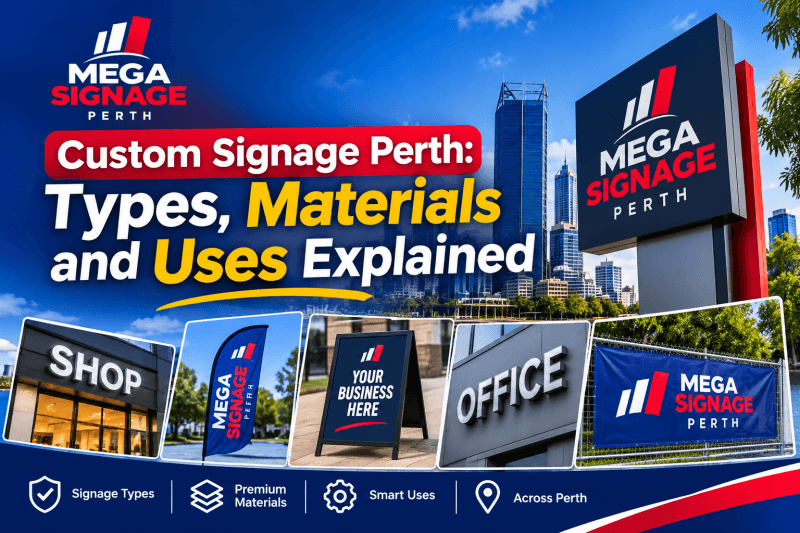
Custom signage plays an important role in how businesses present themselves, communicate with customers and attract attention. From shopfront signs and building signs to vehicle graphics and illuminated displays, the right signage helps businesses create a professional and recognisable appearance.
For businesses across Perth, choosing suitable signage involves more than selecting an attractive design. The type of sign, material, installation location and intended purpose all influence the final result.
Whether you operate a retail store, office, restaurant, construction company or commercial property, understanding different signage options can help you make a better decision.
At Mega Signage Perth, we understand that every business has different signage requirements. This guide explains the most popular types of custom signage, the materials used to manufacture them and how businesses can use them effectively.
What Is Custom Signage?
Custom signage refers to signs designed and produced according to a business’s specific requirements. Unlike standard ready-made signs, custom signs can be created in different shapes, sizes, colours, materials and finishes.
Businesses can customise their signage to include:
- Company names and logos
- Brand colours and graphics
- Promotional messages
- Contact information
- Directional information
- Safety instructions
- Product and service details
Custom signage can be installed indoors or outdoors, depending on the purpose and material selected.
For Perth businesses, customised signs provide flexibility when creating shopfront displays, office identification, promotional signage and large commercial installations.
1. Popular Types of Custom Signage in Perth
Different businesses require different signage solutions. The following are some common types of signage used across Perth.
Shopfront Signage
Shopfront signs are installed on the exterior of retail stores, restaurants, offices and other commercial premises.
They help customers identify a business and understand what it offers. Popular options include fascia signs, acrylic lettering, illuminated signs and aluminium composite panels.
Common uses:
- Retail shops
- Restaurants and cafés
- Shopping centres
- Salons and barbershops
- Commercial offices
A well-designed shopfront sign should display the business name clearly and complement the building’s appearance.
Building Signage
Building signage is used to display business names, company branding and identification information on commercial properties.
These signs can be installed on external walls, building facades, rooftops or designated sign structures.
Popular building signage options include 3D lettering, metal signs, illuminated signs and large printed panels.
Common uses:
- Corporate buildings
- Warehouses
- Industrial facilities
- Commercial properties
- Business complexes
The sign’s size, visibility, mounting method and building surface should be considered before installation.
LED and Illuminated Signage
LED signage uses lighting to improve visibility, particularly during evenings and in low-light environments.
Businesses can choose from LED lightboxes, backlit letters, front-lit signs and illuminated acrylic displays.
Common uses:
- Restaurants and cafés
- Retail stores
- Shopping centres
- Entertainment venues
- Commercial buildings
LED signage can create a modern appearance while making business names and logos easier to see after dark.
Acrylic Signage
Acrylic signs are popular for their smooth finish and professional appearance. They are available in different colours, thicknesses and finishes.
Acrylic can also be cut into custom shapes and individual letters.
Common uses:
- Office reception areas
- Retail displays
- Wall-mounted logos
- Directional signs
- Illuminated displays
Clear, frosted and coloured acrylic options allow businesses to create different visual styles.
Vehicle Signage
Vehicle signage turns company vehicles into mobile advertising displays. It can include printed graphics, business logos, contact information and promotional messages.
Popular options include vehicle stickers, partial wraps and full vehicle wraps.
Common uses:
- Delivery vehicles
- Plumbing businesses
- Electrical companies
- Construction vehicles
- Commercial fleets
Vehicle graphics help maintain consistent branding wherever company vehicles travel around Perth.
A-Frame Signs
A-frame signs are portable displays commonly placed outside shops, cafés and commercial premises.
They are useful for communicating short messages to pedestrians and passing customers.
Common uses:
- Daily specials
- Promotional offers
- Restaurant menus
- Business directions
- Temporary announcements
Their portable design makes them suitable for businesses that regularly change their promotional messages.
Safety and Construction Signage
Safety signage communicates important warnings, instructions and workplace information.
These signs are particularly important in construction, industrial and commercial environments.
Common examples include:
- Warning signs
- Mandatory safety signs
- Prohibition signs
- Emergency exit signs
- Construction site signs
- Personal protective equipment signs
Safety signs should use appropriate designs, colours, symbols and materials according to the applicable Australian requirements.
2. Common Materials Used for Custom Signage
Selecting the right material is essential because it affects the sign’s appearance, durability, maintenance and suitability for different environments.
Here are some commonly used signage materials.
Aluminium
Aluminium is a durable and lightweight metal commonly used for commercial and outdoor signs.
It offers good resistance to corrosion and can be finished with paint or printed graphics.
Best suited for:
- Outdoor business signs
- Safety signs
- Building identification
- Directional signage
- Industrial signage
It is a practical option for businesses requiring rigid signage for longer-term applications.
Aluminium Composite Panel (ACP)
Aluminium composite panel consists of two thin aluminium sheets bonded to a central core.
It provides a flat, lightweight and professional surface for printed graphics and custom signage.
Best suited for:
- Shopfront signage
- Building signs
- Commercial panels
- Wall-mounted displays
- Outdoor advertising
ACP is a popular choice when businesses need a clean finish and a rigid signboard.
Acrylic
Acrylic is a versatile plastic material available in transparent, translucent, frosted and solid-colour finishes.
It can be laser cut or fabricated into different shapes and lettering styles.
Best suited for:
- Reception signs
- Office branding
- 3D lettering
- Lightboxes
- Interior displays
Acrylic is particularly useful for businesses looking for a modern and premium appearance.
Corflute
Corflute is a lightweight corrugated polypropylene material. It is generally affordable and easy to print, cut and install.
Best suited for:
- Real estate signs
- Construction site signs
- Event advertising
- Temporary promotions
- Directional displays
Corflute is a practical option for short-term signage, although it may not be the best choice for permanent installations exposed to harsh weather.
Stainless Steel and Metal
Metal signage provides a strong and professional appearance. Stainless steel and other suitable metals can be fabricated into letters, panels and custom displays.
Best suited for:
- Corporate signage
- Building identification
- Reception areas
- Premium business signs
- Architectural displays
Material grade and protective finishes should be selected according to the installation environment.
Vinyl
Vinyl is a flexible material used for printed graphics, lettering and adhesive signage.
It can be applied to suitable surfaces such as glass, vehicles, walls and display panels.
Best suited for:
- Window decals
- Vehicle graphics
- Wall graphics
- Promotional stickers
- Shopfront branding
Different vinyl grades are available for indoor, outdoor and specialised applications.
3. How Businesses Use Custom Signage
Custom signage is used for several purposes beyond displaying a business name. The right signage solution can help businesses communicate information and improve the customer experience.
Brand Recognition
Consistent colours, logos, fonts and visual elements help customers recognise a business.
Using the same branding across shopfront signs, vehicles, windows and internal displays creates a consistent business identity.
Attracting Potential Customers
Visible and professionally designed signage can attract the attention of pedestrians and passing motorists.
Shopfront displays, illuminated signs and promotional boards are useful examples.
Providing Business Information
Signs can communicate essential information such as business names, opening hours, services, directions and contact details.
Clear messaging helps customers understand where they are and what a business offers.
Improving Workplace Safety
Safety signs communicate hazards, restrictions and emergency information.
They help employees, contractors and visitors understand important workplace instructions.
Promoting Products and Special Offers
Businesses can use banners, window graphics, A-frame signs and temporary promotional boards to highlight new products, discounts and seasonal offers.
4. How to Choose the Right Signage Material
Not every material is suitable for every signage application. Before selecting a material, consider the following factors.
1. Installation Location
Determine whether the sign will be installed indoors or outdoors. Outdoor signs may require materials and finishes that can withstand sunlight, rain and changing weather conditions.
2. Expected Lifespan
Temporary promotional signs have different requirements from permanent building or shopfront signage.
For temporary displays, Corflute may be suitable. For longer-term installations, aluminium and ACP are worth considering.
3. Design and Appearance
Consider the overall appearance you want to achieve. Acrylic can provide a modern finish, while metal lettering can create a more substantial architectural appearance.
4. Maintenance Requirements
Different materials require different levels of cleaning and maintenance. Consider how easily the sign can be accessed and maintained after installation.
5. Budget
Your budget should account for more than the material itself. Design, printing, fabrication, lighting, installation and maintenance can all influence the overall cost.
5. Important Considerations for Signage in Perth
Perth businesses should consider local environmental conditions and installation requirements when planning custom signage.
Sunlight and UV Exposure: Outdoor signs may experience prolonged exposure to sunlight. Suitable UV-resistant printing, protective laminates and exterior-grade materials can help maintain their appearance.
Wind and Weather: Large panels, banners and freestanding signs need suitable structural support and secure installation.
Coastal Conditions: Businesses near coastal areas should consider corrosion-resistant materials and appropriate fixings.
Visibility and Readability: Signage should have suitable lettering, contrast and placement so customers can understand the message from the intended viewing distance.
Local Council Requirements: Depending on the sign’s location, dimensions, illumination and installation method, planning or other approvals may be required. Check the relevant local council requirements before installing commercial signage.
6. Why Professional Signage Design and Installation Matter
A good signage project requires proper planning, material selection, design and installation.
Poorly selected materials can affect the sign’s appearance and lifespan. Incorrect positioning or unsuitable fixing methods can also create installation problems.
Professional signage planning helps businesses consider:
- Suitable materials for the application
- Correct sign dimensions
- Brand colours and logo placement
- Readability and visibility
- Lighting requirements
- Mounting and installation methods
- Maintenance and durability
At Mega Signage Perth, the aim is to provide signage solutions that match business requirements, visual identity and practical installation needs.
Conclusion
Custom signage is an important part of presenting a professional business image. From shopfront and building signs to acrylic displays, vehicle graphics, LED signage and promotional boards, each option serves a different purpose.
Choosing the right material is equally important. Aluminium, ACP, acrylic, Corflute, metal and vinyl each offer different benefits depending on the location, design and expected lifespan of the sign.
For businesses looking for Signage Perth, understanding these options makes it easier to choose signage that suits their premises, branding and requirements.
Mega Signage Perth provides signage solutions designed to help businesses create clear, professional and visually appealing displays.
The right combination of signage type, material and design can help your business make a stronger impression across Perth.
Frequently Asked Questions (FAQs)
1. What is custom signage?
Custom signage is designed and manufactured according to a business’s specific requirements, including its logo, colours, size, material and intended purpose.
2. What are the most popular types of signage in Perth?
Popular options include shopfront signs, building signage, LED signs, acrylic signs, vehicle wraps, A-frame signs and safety signs.
3. Which material is best for outdoor business signage?
Aluminium and aluminium composite panels are popular choices for outdoor business signage. The best material depends on the installation location, weather exposure and expected lifespan.
4. Is acrylic signage suitable for businesses?
Yes. Acrylic signage is suitable for office reception areas, retail displays, wall-mounted logos, illuminated signs and other applications requiring a clean, professional appearance.
5. How do I choose the right custom signage for my business?
Consider your business type, installation location, visibility requirements, budget, preferred design and expected sign lifespan before selecting a signage solution.