
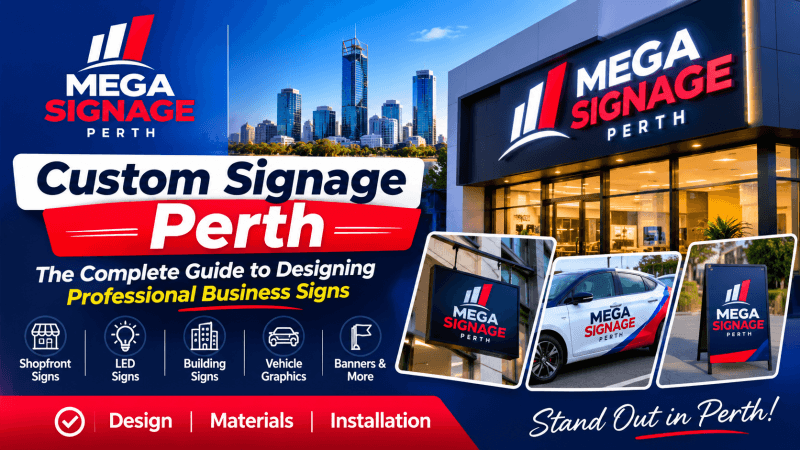
Custom signage plays an important role in how customers recognise and remember a business. A professionally designed sign communicates your brand identity, attracts attention and gives your business a professional appearance.
For businesses in Perth, choosing the right signage means considering design, colours, materials, size, visibility and installation. This guide explains the essential steps to designing professional custom business signs.
1. Understand Your Business Signage Requirements
Before designing a sign, decide what you want it to achieve. Different businesses require different signage solutions.
- Shopfront signs for retail stores.
- Building signs for offices and commercial properties.
- LED signs for better visibility.
- Window decals for branding and promotions.
- Vehicle signage for business advertising.
- A-frame signs for attracting nearby customers.
- Directional signs for guiding visitors.
Choosing signage according to your business requirements helps create a practical and effective design.
2. Choose the Right Signage Design
A professional sign should communicate your business message clearly. Avoid complicated designs that make it difficult for customers to understand your brand.
Consider these important design elements:
Business logo: Use a clear, high-quality logo that represents your brand.
Brand colours: Choose colours that match your business identity and create good contrast.
Typography: Use readable fonts that customers can recognise from an appropriate distance.
Message: Keep the business name and main message clear and concise.
Layout: Arrange text, graphics and logos in a balanced design.
A simple and organised layout generally creates a more professional appearance.
3. Select the Best Material for Custom Signs
Material selection affects the appearance, durability and performance of business signage.
| Material | Best application |
| Acrylic | Office and reception signs |
| Aluminium | Outdoor business and building signs |
| Stainless steel | Premium commercial signs |
| PVC | Indoor and selected outdoor signs |
| Corflute | Temporary advertising signs |
| Vinyl | Window graphics and vehicle stickers |
| Mesh | Large outdoor banners |
For outdoor signage in Perth, consider sunlight, heat, rain and wind exposure when selecting materials.
4. Select the Right Type of Custom Business Sign
Different signage styles serve different business purposes.
Shopfront Signage: Helps customers identify your store and recognise your brand.
LED Illuminated Signs: Improve visibility in the evening and low-light conditions.
Acrylic Signs: Provide a clean, modern appearance for offices, reception areas and retail spaces.
Metal Signs: Offer a professional finish for commercial buildings and outdoor applications.
Building Signs: Display business names and identification on commercial properties.
Window Graphics: Turn glass surfaces into useful branding and promotional displays.
Vehicle Signage: Promote your business through professionally designed vehicle wraps and stickers.
Promotional Banners: Communicate offers, events and business messages.
5. Focus on Visibility and Readability
A business sign should be easy to read and understand.
To improve visibility:
- Select an appropriate letter size.
- Use contrasting background and text colours.
- Avoid excessive text.
- Choose clear fonts.
- Consider the viewing distance.
- Position the sign where customers can easily see it.
- Consider illumination where necessary.
For roadside and outdoor signs, readability is particularly important because viewers may only have a few seconds to understand the message.
6. Choose the Correct Sign Size and Placement
The size of your sign should match the building, available space and viewing distance.
A small sign may be suitable for an office entrance, while a larger shopfront or building sign may be necessary for a commercial property.
Before production, check:
- Available installation space.
- Building dimensions.
- Viewing angles.
- Surrounding structures.
- Pedestrian and vehicle visibility.
- Mounting and fixing requirements.
Proper positioning helps ensure that your signage performs its intended function.
7. Consider Lighting for Professional Signage
Lighting can improve the appearance and visibility of business signs.
LED illumination is commonly used in illuminated shopfront signs, lightboxes and dimensional lettering.
When selecting illuminated signage, consider brightness, energy consumption, electrical requirements and maintenance access.
The lighting should make the sign easy to read without creating unnecessary glare.
8. Follow Local Signage Requirements in Perth
Before installing external signage, check the applicable local council requirements.
Depending on the sign type, dimensions, location and installation method, development approval, a building permit or a sign permit may be required.
Businesses should also consider structural safety, suitable mounting methods and restrictions relating to heritage buildings or public spaces.
Always check the requirements with the relevant Perth metropolitan council before starting installation.
9. Common Custom Signage Design Mistakes
Avoid these mistakes when creating professional business signs:
- Using too many colours and fonts.
- Adding unnecessary information.
- Choosing poor-quality materials.
- Using low-resolution logo artwork.
- Ignoring visibility and readability.
- Selecting an unsuitable sign size.
- Placing signs in poorly visible locations.
- Ignoring installation and maintenance requirements.
A carefully planned design helps prevent these problems and produces a more professional result.
Conclusion
Designing professional custom business signs requires the right combination of branding, materials, colours, typography, visibility and placement.
Whether you need shopfront signs, LED signs, acrylic signs, metal signs, building signage or vehicle graphics, every design should reflect your business identity and meet its practical requirements.
For businesses looking for Custom Signage Perth solutions, Mega Signage Perth provides signage options designed to help create a professional business appearance and improve brand visibility.
Frequently Asked Questions
1. What is custom signage?
Custom signage is designed according to a business’s logo, colours, branding, dimensions and specific requirements. It includes shopfront signs, building signs, LED signs and promotional displays.
2. Which material is best for business signage?
Acrylic, aluminium, stainless steel, PVC and vinyl are common materials. The best option depends on the sign’s location, application and environmental exposure.
3. How do I design professional business signage?
Use your business logo, consistent brand colours, readable fonts and a simple layout. Choose suitable materials and make sure the sign is visible from the intended viewing distance.
4. Which custom signs are best for Perth businesses?
Shopfront signs, LED signs, building signs, window graphics, vehicle signage and promotional banners are popular options. The right choice depends on your business type and requirements.
5. Do I need council approval for custom signage in Perth?
Some external signs require council approval or permits. Requirements depend on the sign’s dimensions, location, type and installation method.