
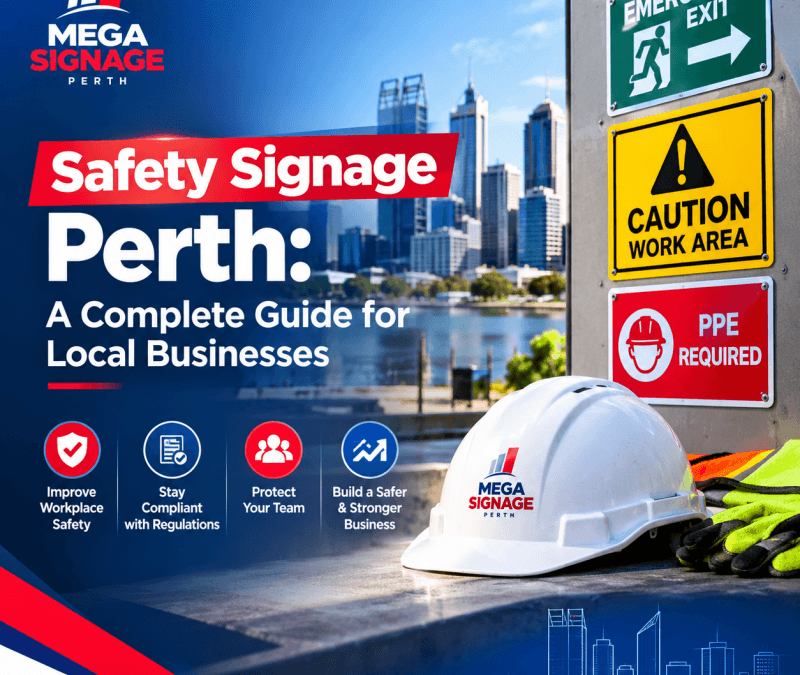
Safety signage is an important part of creating a safer workplace. For businesses across Perth, the right signs can help employees, contractors, customers and visitors recognise hazards, follow safety instructions and locate emergency facilities quickly.
From construction sites and warehouses to offices, retail stores, factories, schools and commercial properties, safety signage Perth should be clear, easy to understand and appropriate for the risks present at the workplace.
For local businesses, safety signs should not be treated as simple wall decorations. They are one part of a broader workplace risk-management system. WorkSafe WA explains that businesses must identify hazards, assess risks, implement suitable controls and review those controls regularly.
What Is Safety Signage?
Safety signage communicates important information about hazards, prohibited actions, required behaviour, emergency procedures or safety facilities.
Common examples include:
- Warning signs
- Danger signs
- Prohibition signs
- Mandatory signs
- Emergency exit signs
- First aid signs
- Fire safety signs
- PPE requirement signs
- Hazard identification signs
- Restricted access signs
- Wet floor signs
- Electrical hazard signs
- Forklift and traffic warning signs
- Construction site safety signs
The purpose is simple: communicate safety information quickly and clearly before an accident happens.
Why Is Safety Signage Important for Perth Businesses?
Every workplace has different risks. A Perth warehouse may have forklifts, loading areas and storage hazards, while a restaurant may need signs for wet floors, hot equipment and restricted areas.
Clear signage can help people recognise these risks and understand what action is expected.
WorkSafe WA notes that workers should receive information, instruction and training relevant to workplace hazards and safe work procedures. Safety signs can support these processes by providing visible reminders where people need them.
Effective safety signage can help businesses:
- Identify workplace hazards
- Warn people about dangerous areas
- Direct workers towards emergency exits
- Identify first aid facilities
- Communicate PPE requirements
- Control access to restricted areas
- Reinforce workplace procedures
- Improve visitor awareness
- Support a stronger safety culture
However, signage should not be used as the only control for a serious hazard. WorkSafe WA guidance makes clear that businesses need to manage risks through appropriate control measures rather than relying on warnings alone.
Common Types of Safety Signs in Perth
1. Warning Signs
Warning signs alert people to hazards that may cause injury or harm.
Examples include:
- Slippery surface
- Forklift operating area
- High voltage
- Moving machinery
- Hot surface
- Chemical hazards
- Uneven surfaces
These signs are particularly useful in warehouses, workshops, factories, construction areas and industrial properties.
2. Mandatory Signs
Mandatory signs tell people what they must do to stay safe.
For example:
- Wear safety glasses
- Wear hearing protection
- Wear protective footwear
- Wear a hard hat
- Wear high-visibility clothing
- Use required PPE
These signs can be positioned at entrances to work areas or close to specific hazards.
3. Prohibition Signs
Prohibition signs communicate actions that are not permitted.
Examples include:
- No smoking
- No entry
- No unauthorised personnel
- Do not operate
- No pedestrian access
They can help businesses communicate restrictions clearly to employees, contractors and visitors.
4. Emergency and Exit Signs
Emergency signs help people locate important facilities and evacuation routes.
These may include:
- Emergency exits
- Evacuation routes
- Assembly areas
- Fire equipment
- First aid
- Emergency equipment
WorkSafe WA specifically recommends recognised first-aid signs to help workers and others locate first-aid equipment and facilities.
5. Construction and Site Safety Signs
Construction environments can change regularly, making clear site signage especially important.
Signs may identify:
- Construction zones
- PPE requirements
- Falling-object hazards
- Restricted areas
- Mobile plant
- Site entrances
- Pedestrian routes
- Emergency information
Signs should be reviewed when site conditions change rather than being installed once and forgotten.
Where Should Safety Signs Be Installed?
The location of a safety sign is just as important as the sign itself.
A sign should be positioned where the relevant person can see and understand it before reaching the hazard or decision point.
Depending on the workplace, safety signage may be installed:
- At building entrances
- Near hazardous machinery
- Around loading zones
- At warehouse aisles
- Near chemical storage
- Beside electrical equipment
- At construction entrances
- Around restricted areas
- Near emergency equipment
- Along evacuation routes
- In staff-only areas
- Around car parks and vehicle movement areas
The exact placement should be determined by the hazard, visibility, workplace layout and risk assessment.
Choosing the Right Safety Signage for Your Business
Before ordering safety signs, Perth businesses should consider the actual hazards present at their premises.
Step 1: Identify the Hazards
Walk through your workplace and identify areas where workers, visitors or customers could be exposed to risks.
Consider machinery, vehicles, chemicals, electricity, slips, trips, restricted areas and emergency access.
Step 2: Determine the Required Control
Ask whether signage is an appropriate control or whether another measure is needed as well.
For example, a “Danger” sign may warn people about a hazardous area, but physical barriers, guarding or restricted access may also be necessary.
Step 3: Make the Message Clear
Avoid unnecessarily complicated wording. People should understand the message quickly.
Use clear language, suitable symbols and strong visual contrast.
Step 4: Consider Visibility
A safety sign hidden behind equipment or positioned too far away may not communicate effectively.
Think about viewing distance, lighting, height and the normal movement of people around the site.
Step 5: Review Your Signs
Safety signage should remain relevant when your workplace changes.
If you change machinery, floor layouts, access points or work processes, review your signs as part of the risk-management process.
Safety Signage for Different Perth Industries
Different businesses require different signage solutions.
Warehouses and Industrial Businesses
Warehouses may require forklift warnings, pedestrian instructions, PPE signs, restricted-access signs and loading-zone safety signage.
Construction Companies
Construction sites can require warning signs, mandatory PPE signs, site rules, hazard warnings and access-control signage.
Retail Businesses
Retail stores may need wet-floor warnings, emergency information, restricted-area signs and customer safety notices.
Restaurants and Hospitality
Restaurants may benefit from signs relating to wet floors, hot surfaces, staff-only areas, emergency exits, fire equipment and hygiene procedures.
Offices and Commercial Buildings
Offices can require emergency exit information, first aid signs, fire equipment identification and restricted-access signage.
Schools and Community Facilities
Schools and public facilities may need signs for emergency procedures, restricted areas, wet surfaces, traffic movement and visitor directions.
Safety Signage Across Perth
Businesses throughout the Perth metropolitan area can benefit from professionally planned safety signage.
This includes commercial and industrial areas around:
Perth CBD, Northbridge, West Perth, East Perth, South Perth, Victoria Park, Belmont, Burswood, Osborne Park, Balcatta, Malaga, Bayswater, Welshpool, Canning Vale, Bibra Lake, O’Connor, Fremantle, Joondalup, Wangara, Midland, Morley, Rockingham, Mandurah and surrounding Perth suburbs.
The exact signage requirements will depend on the type of business, workplace layout and hazards identified at each location.
Why Choose Professional Safety Signage?
Professionally produced signage can provide a cleaner, more consistent and durable solution for busy workplaces.
Mega Signage perth can help businesses plan signage around their branding, workplace environment and communication requirements.
A professional signage approach can consider:
- Sign size
- Material selection
- Visibility
- Installation location
- Indoor or outdoor conditions
- Message clarity
- Workplace environment
- Long-term durability
For businesses operating in demanding environments, selecting suitable materials and finishes is also important because signs may be exposed to sunlight, moisture, dust, chemicals or heavy traffic.
Safety Signage and Australian Standards
Businesses should make sure their safety signage is appropriate for its intended use and consider relevant Australian Standards.
WorkSafe WA specifically refers businesses to AS 1319 – Safety signs for the occupational environment when discussing first-aid signs.
Standards and workplace requirements can vary depending on the application, so businesses should assess their individual workplace and obtain appropriate professional or regulatory advice where necessary.
Final Thoughts
Good safety signage in Perth is about more than putting warning signs on walls. Effective signage should communicate the right message, in the right location, at the right time.
Start by identifying workplace hazards, consider the appropriate risk controls, make important information easy to understand and regularly review your signs when conditions change.
For Perth businesses looking for professional signage solutions, Mega Signage perth can help create practical signage designed around your workplace requirements.
Clear signs can support better communication, improve hazard awareness and contribute to a safer environment for employees, contractors, customers and visitors.
FAQs About Safety Signage Perth
1. What is safety signage used for?
Safety signage communicates hazards, required actions, prohibited activities, emergency information and the location of safety facilities within a workplace.
2. What types of safety signs do Perth businesses need?
The signs required depend on the workplace and identified hazards. Common examples include warning, mandatory, prohibition, emergency, first aid, fire safety, PPE and restricted-access signs.
3. Are safety signs required in Australian workplaces?
Workplace safety requirements depend on the hazards, activities and circumstances of the workplace. Businesses have duties to manage WHS risks and provide appropriate information and instructions.
4. Where should safety signs be placed?
Signs should generally be positioned where people can see and understand the relevant safety information before reaching a hazard, restricted area, emergency facility or decision point.
5. Can Mega Signage perth create custom safety signs?
Yes. Mega Signage perth can provide signage solutions for different commercial, industrial and workplace environments across Perth, with designs and materials selected according to the intended application.